
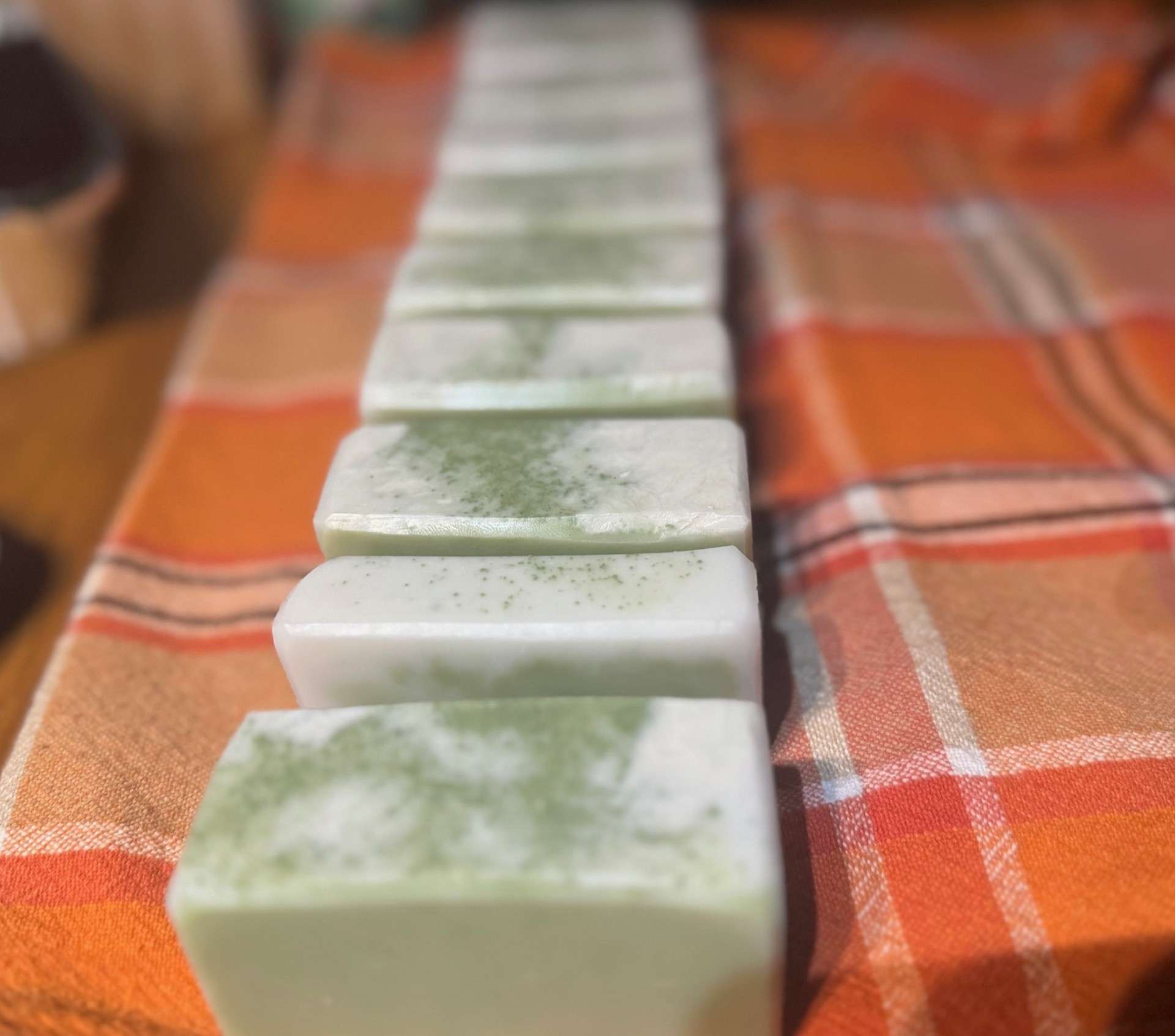
When I first decided to try to make Jasmine & Vanilla cold process soap, I wasn’t sure how it would turn out. I’ve always loved the idea of making something with my own hands that my family could actually use every day. Store-bought soap is convenient, but there’s just something satisfying about knowing exactly what’s in it — oils, lye, scents I chose myself, and a little creativity.
This first batch was a learning experience, and while I didn’t have quite enough ingredients to make the “perfect” ratio, it still worked beautifully. The bars just turned out a little smaller — which, honestly, makes them kind of cute!
Gathering My Supplies
For anyone new to cold process soap making, the tools are just as important as the ingredients. Here’s what I used:
- Soap mold → the kind with silicone inserts so the bars pop out easily.
- Stick blender → helps speed up “trace,” which is when the oils and lye start turning into soap.
- Digital scale → because soap making is all about precision.
- Heat-safe bowls for mixing the oils and lye solution.
- Gloves + goggles — trust me, you don’t want to skip these.
And of course, the ingredients:
- Olive oil, coconut oil, and shea butter for the base.
- Lye (sodium hydroxide) for the magic chemical reaction that turns oils into soap.
- Jasmine and vanilla fragrance oils for a sweet, calming scent.
- Natural clay for a soft, earthy color.
Mixing the Cold Process Soap (and Adjusting the Ratios)
Most tutorials give you recipes that make a full loaf of soap, but when I went to measure my oils, I realized I didn’t have quite enough. Instead of stopping, I decided to adjust my ratios down.
All that really meant was that the recipe made smaller bars — and honestly, it worked out just fine. Smaller soaps are actually great for gifts, travel, or testing new scents.
I carefully mixed my lye into water (always add lye to water, never the other way around), then let it cool while I melted my oils together in a separate bowl. When the temperatures were close, I combined them and blended with my stick blender until it thickened.
That’s when the fun part began — I added my Jasmine and Vanilla, and then stirred in a spoonful of clay. The clay gave it a beautiful natural tint, almost like a soft blush color, and I could already smell the warm vanilla mixing with the floral jasmine.
Into the Mold and the Waiting Game
I poured everything into my cold process soap mold and smoothed the top with a spatula. The mixture looked so pretty, I could already imagine what the bars would look like once cut.
Then came the hardest part: waiting. Soap making requires patience because the bars need to cure for weeks. Even though they look ready after a day or two in the mold, they still need time for excess water to evaporate and for the soap to harden properly.
Jasmine & Vanilla Cold Process Results
When I finally unmolded my soap, I was so excited. The bars were smaller than the ones I’d seen online, but they were perfect in their own way. The clay gave them a gentle, earthy tone, and the scent of jasmine and vanilla was heavenly — sweet but calming at the same time.
Every time I walk past the spot where they’re curing, I get a little whiff, and it makes me smile. There’s something special about knowing I made this, even if it’s not “perfect.”

Want to Try It Yourself?
Here’s a quick list of the exact tools I used (or close alternatives):
- Soap mold
- Stick blender
- Digital scale
- Protective gloves
- Protective Goggles
- Jasmine fragrance oil
- Vanilla fragrance oil
- Natural clay powder
Final Thoughts
Making cold process soap taught me that you don’t have to do everything perfectly to enjoy the process. Even with smaller bars, the outcome was just as satisfying. It’s all about experimenting, being safe, and having fun with the scents, colors, and designs. This batch of jasmine and vanilla cold process soap turned out better than I imagined.
My next batch? I’m already dreaming up new combinations — maybe lavender and mint, or oatmeal and honey. But for now, I’m enjoying my little stack of jasmine and vanilla bars, and feeling proud every time I use one.
For now check out my Liquid Hand Soap that I made from the Natural plant Soap Wort.